This page has moved to the Defense Innovation Unit
You are being redirected to DIU.mil
This page has moved to the Defense Innovation Unit
You are being redirected to DIU.mil
We use cookies for analytics, to see our policy, please read our Privacy Policy.
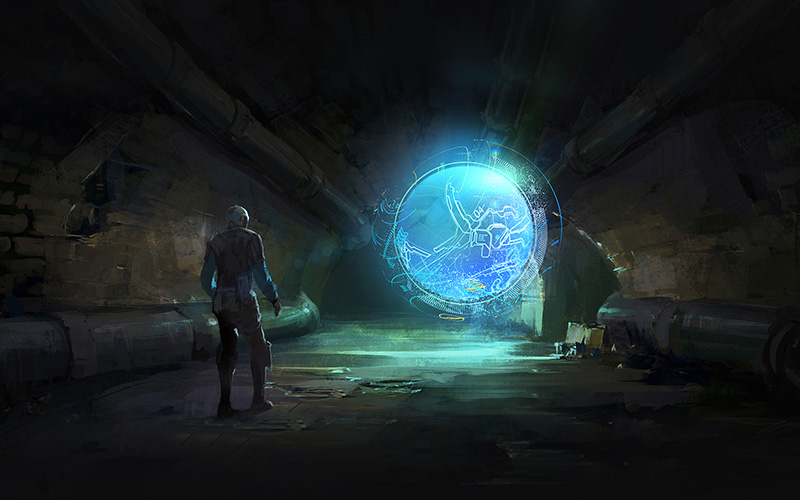
The world’s population is becoming increasingly concentrated in dense urban areas, with nearly 7 billion people expected to live in cities by 2050. Skyscrapers are filling skylines and infrastructure is extending deeper underground. This creates manifold challenges for first responders and military operators. For first responders, higher urban density creates greater risks associated with structure fires, subway tunnel collapses, and police actions; for military operators it creates challenges for keeping soldiers safe.
NSIN, the Department of Defense, and first responders need your help to create new solutions to this challenge.
Because of COVID-19 we have had to delay our in-person hackathon in NYC indefinitely. But now you can get a head start developing your solution by joining our online challenge starting May 1, 2020. Help us solve the critical challenge of achieving situational awareness of interior spaces in dense urban environments. Throughout the challenge, you’ll have the opportunity to engage with military and first responder end users for in-depth customer discovery, interact with technical mentors who can provide advice on designs and engineering, and team up with other creative individuals to conceptualize novel solutions.
When the pandemic is over you will be able compete with your solution for one of three $15k awards at our NYC hackathon. For teams not local to the NYC area, NSIN will, at the end of the Online Challenge, competitively select and sponsor up to five teams to travel to NYC to compete in the in-person hackathon.
Dense urban environments present specific challenges for leaders at every level due to their complexity; congestion caused by the number of people, automobiles, buildings, and electronic devices; and the amount of unknown terrain, both horizontal and vertical. This online challenge and subsequent hackathon seek to generate novel concepts and solutions for sensing (e.g. detecting, measuring, mapping, monitoring) interior spaces, transmitting the data, and providing an understanding of the dense urban environment to first responders and operators.
Develop a system that can collect information about an interior space, transmit the data to both emergency responders and command and control (C2) elements, interpret the data, and present actionable information in an intuitive manner to the operator on a timeframe of minutes to hours.
The following focus areas are to help spur technology concepts or solutions that will enable users to understand the interior space aspect of dense urban environments and operate effectively:
Understanding the geometry and content of interior spaces
Sensing and characterizing occupants and assessing activity
Timely transmission of data in usable formats
Presenting actionable information to responders, operators, and decision makers
Identify and map the layout and open routes; identify closed routes; identify, detect, and map the location of critically injured people, non-injured people, and emergency responders.
Identify the building layout; identify, detect, and map the location of critically injured people, non-injured people, and emergency responders.
Identify the building layout and discriminate between hostages and hostage takers.
Solutions can leverage a wide range of technology from autonomous robots; multiple-input multiple-output (MIMO) communications; GPS-denied navigation; artificial intelligence/machine learning; to multispectral sensors; to advanced visualization systems including Virtual and Augmented Reality.
You are welcome and encouraged to participate in this challenge with your own team already assembled. However, we find diversity to be key; you shouldn’t be afraid to find other people who complement the skills and experience you and your team offer.
There are no limits to team size, however, we suggest that teams should be no less than three and no more than eight individuals. For those in need of teams, we will help facilitate some team formation.
01 MAY: Hackathon Online Challenge event begins
08 MAY: Ask-Me-Anything Q&A session with mentors
28 JUNE: Hackathon Online Challenge event closes





Email hacks@nsin.us.
Your browser is old and unsupported. You may still use the site, but functionality will be limited and you may see errors. Please consider updating your browser.